How to Compare Exterior Painting Estimates in Vancouver, WA: What the Best Bid Includes
How to Compare Exterior Painting Estimates in Vancouver, WA: What the Best Bid Includes
When you lay three exterior painting bids side by side and one is $4,000 less than the others, the difference almost never comes from efficiency — it comes from what that contractor left out of the scope. In Vancouver, WA, where wet winters and moss pressure mean prep quality directly controls how long a paint job lasts, a missing line item is not a minor detail. A written estimate is a document, and every blank space in it carries a cost.
Why Do Exterior Painting Bids in Vancouver, WA Vary So Much?
Large gaps between bids usually reflect differences in prep depth, material grade, and labor hours — not one contractor being more generous with their pricing.
Labor rates in Clark County are fairly consistent among established crews. What separates a $4,500 bid from a $7,500 bid is almost always the scope behind it. One contractor may plan to pressure wash, scrape, sand, caulk, prime bare wood, and apply two full coats. Another may plan to rinse the surface and apply one coat of mid-grade paint. Both bids can sound professional on the phone.
The cheapest bid is not automatically a red flag — but a bid that is vague about preparation almost always is. If you cannot tell from reading the document what the crew will actually do before a brush touches the wall, you are looking at a bid designed to win on price, not deliver on quality. Exterior painting services that hold up in this region depend heavily on what happens before any paint is applied.
What Must a Complete Written Estimate Include?
A thorough written estimate names every major task separately — surface preparation, washing, primer, paint product, coat count, and cleanup — so you can compare contractors on equal terms.
Surface preparation scope should list specific tasks: scraping loose or peeling paint, hand-sanding rough edges, filling cracks, and caulking gaps around windows, doors, and trim. If the estimate says only 'prep as needed,' that phrase gives the crew permission to do as little as they judge necessary. Gaps left uncaulked let moisture behind the paint film, which causes bubbling and peeling within a season or two in the Pacific Northwest.
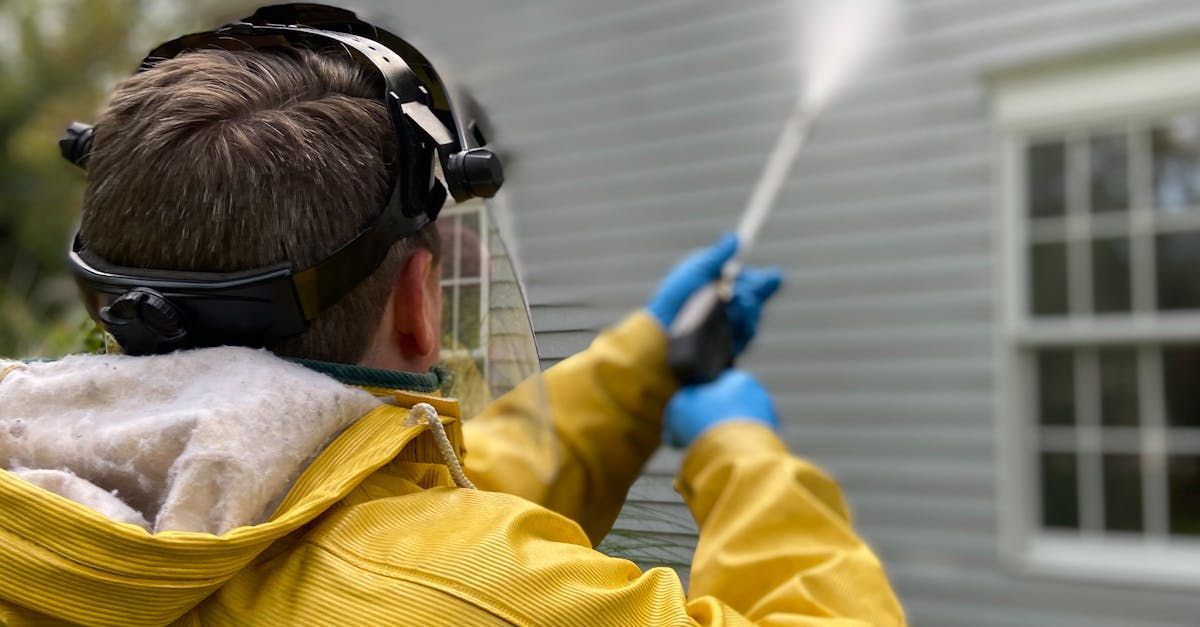
Pressure washing should appear as its own named line item, not bundled silently into a general prep charge. The estimate should note the method and whether any mildew treatment is included. Skipping or rushing this step leaves biological growth on the surface, and paint applied over mildew will fail regardless of how expensive the product is. Learn more about pressure washing before painting and why it matters as a first step.
Primer specification is one of the clearest quality signals in any bid. A strong estimate names the primer brand, the product line, and where it will be applied — bare wood, repaired areas, or a full coat over the entire surface. The phrase 'will prime as needed' is a red flag because it commits to nothing. In Vancouver's climate, a moisture-blocking or stain-blocking primer on bare wood is not optional; it is the layer that keeps the finish coat adhered through wet-season temperature swings.
Paint product, sheen, and coat count must all be named. 'Quality paint' written without a brand or product number tells you nothing — every contractor claims quality. The estimate should list the brand, the specific product line, the sheen level, and the number of coats. One coat over bare or previously peeling wood is a failure waiting to happen in a region that sees 38 to 42 inches of rain annually. Two coats of a named, exterior-grade product is the standard that holds up.
What is left unstated is just as important as what is written. No caulking mention means gaps stay open. No primer spec means adhesion is at risk. No coat count means the contractor can apply one thin pass and claim the job is done. No warranty language means there is no defined accountability if the finish fails early.
How Does the Pacific Northwest Climate Raise the Stakes on Every Estimate?
Vancouver, WA's rain cycles, temperature swings, and moss growth mean that shortcuts in prep or materials cause visible failure faster here than in drier inland climates.
Paint film expands and contracts with temperature. When that film is applied over a surface that was not fully dried, primed, or caulked, the movement opens micro-gaps where moisture enters. Over a wet Pacific Northwest winter, those gaps become peeling sections, bubbles, or dark mildew staining. A paint job that might last eight years in eastern Washington can fail in two or three here if the prep was insufficient.
This is why every line item in a Vancouver estimate carries more weight than it might elsewhere. A missing pressure wash step or a generic primer spec is not just an oversight — it is a structural risk given the regional conditions.
Judging Bid Quality When You Are Not a Painter
You do not need technical expertise to evaluate a bid — you need to check whether the document answers specific questions a quality contractor should be willing to answer in writing.
Ask for the spec sheet on the paint product named in the estimate. A legitimate product spec will confirm whether that coating is rated for exterior use, what its mil thickness is when applied, and whether it carries a mildew-resistant formulation. If the contractor listed a product, they should be able to share the spec sheet within 24 hours.
Compare the ratio of prep time to paint time across your bids. A bid that allocates very little labor to preparation and most of it to application is telling you something about priorities. Prep is slower and less visible than painting, so it is the first place a cost-cutting contractor trims the scope.
For residential painting projects where the siding or trim has existing peeling, fading, or mildew, the prep scope should be longer and more detailed — not shorter. A bid that glosses over a visibly distressed surface is not being efficient; it is passing the failure cost back to you in two years.
A Side-by-Side Bid Comparison Checklist
Use this framework to evaluate each written estimate you receive on the same terms:
- Pressure washing: Listed as a named line item? Method specified?
- Surface prep scope: Scraping, sanding, caulking, and crack-filling each named?
- Primer: Brand and product named? Application areas specified?
- Paint product: Brand, product line, and sheen level named?
- Coat count: Number of coats stated explicitly?
- Warranty or guarantee: Any written language about workmanship?
- Cleanup and protection: Masking, drop cloths, and site cleanup mentioned?
- What is missing: Any of the above left unstated?
If a bid answers all of these in writing, you can evaluate it fairly against others. If it leaves several blank, the low price reflects the missing work — and that work will still need to happen, one way or another, before the paint holds.
A complete written estimate protects you because it defines the scope before work begins, leaving no room for disputes about what was included. Every vague phrase in a bid is a future disagreement waiting to happen.
Schedule a written estimate with A.P.E. Painting Inc to see exactly how a fully scoped exterior bid should read before you make your final decision.